
How Arrest Warrants Work in Leelanau County
Every warrant opens the same way in Leelanau County. A complaint is filed and sworn, then handed to a magistrate who weighs the facts. If the facts add up to reasonable cause, the court signs an order that authorizes an arrest. That order is what puts deputies on the street. Michigan law leans toward a summons when one will do, since a summons simply asks the person to appear. A warrant is held for the situations that call for custody instead. The difference matters to anyone facing either one, because the response required is not the same.
The Complaint Behind a Leelanau Arrest Warrant
Behind every arrest warrant sits a written record a judge has reviewed. Under MCL 764.1a, the path runs from sworn complaint to reasonable-cause finding to a summons or warrant. A magistrate may rest that finding on the complaint alone, sworn testimony, an affidavit, or extra sworn material. The supporting affidavit is often the tightest-kept piece of the file, since it can be sealed, redacted, or withheld while an investigation runs. What you can read may be thinner than what exists. The 13th Circuit Court page lays out how the three-county arrangement works for Leelanau County.
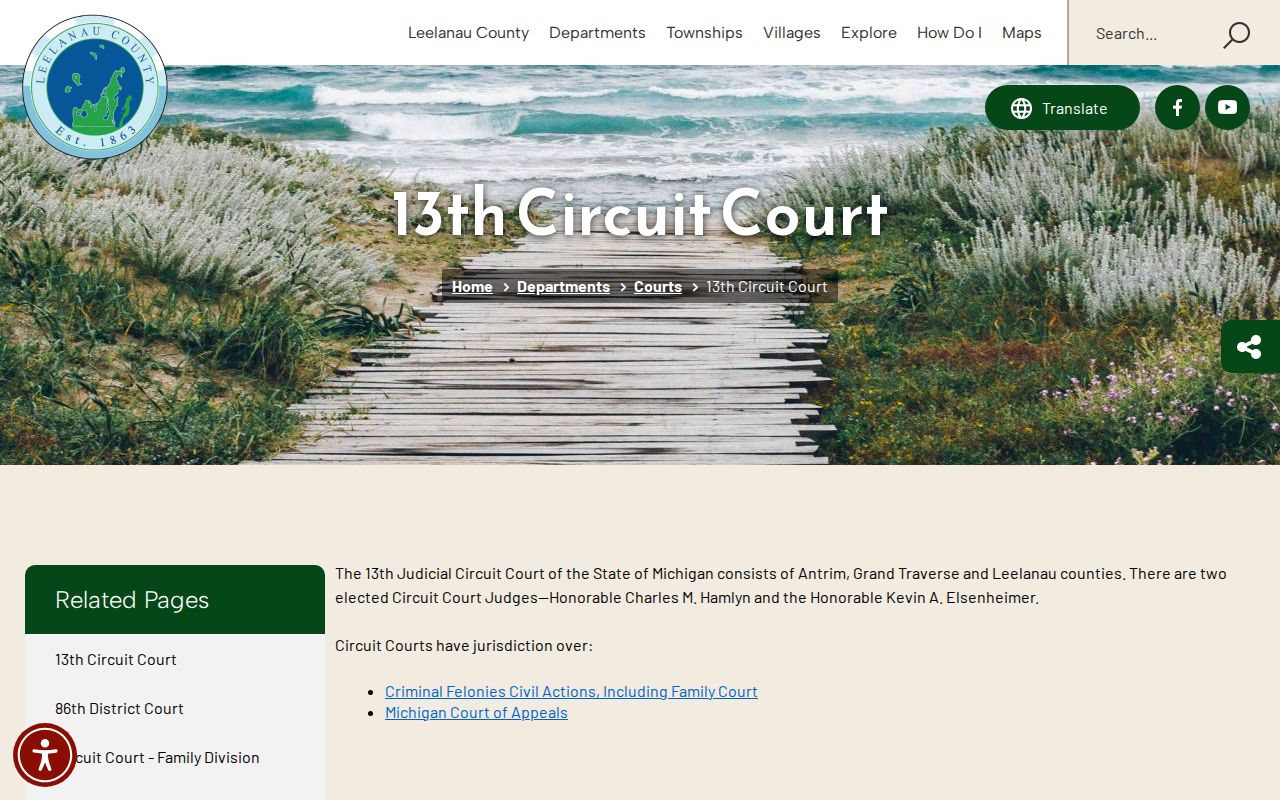
That shared structure decides which clerk counter holds a felony file.
Arrest Warrants: What They Contain
The order itself runs short. Michigan court rules fix what a Leelanau County warrant must carry. Those are the fields to expect when you ask the clerk for a specific file.
| Accused name or description | Enough detail to identify the person, which is why a name mismatch happens. |
|---|---|
| Offense | The charge and its classification, from ordinance violation to felony. |
| Command to a peace officer | The direction that authorizes an arrest and the agency that may act on it. |
| Court signature | The judicial officer and court that issued the order. |
| Interim bail | Release terms the court may attach before arraignment. |
| Case number | The locator, printed as a Case/Ticket Number on district files. |
| Geography or agency limits | Any instruction about where or by whom the warrant may be served. |
Why Circuit Cases Move to the Clerk
Felony cases in Leelanau County start in district court and move up after bind-over. The file changes hands then, and so does the office holding it.
13th Circuit Court
Felony criminal cases, family matters, civil cases within circuit jurisdiction, and appeals
Antrim, Grand Traverse, and Leelanau Counties
Leelanau County Clerk
Michelle L. Crocker, local circuit records and the counter for file requests
(231) 256-9824
Central circuit administration sits in Traverse City at (231) 922-4701. The circuit court administration page explains the three-county setup that includes Leelanau County.
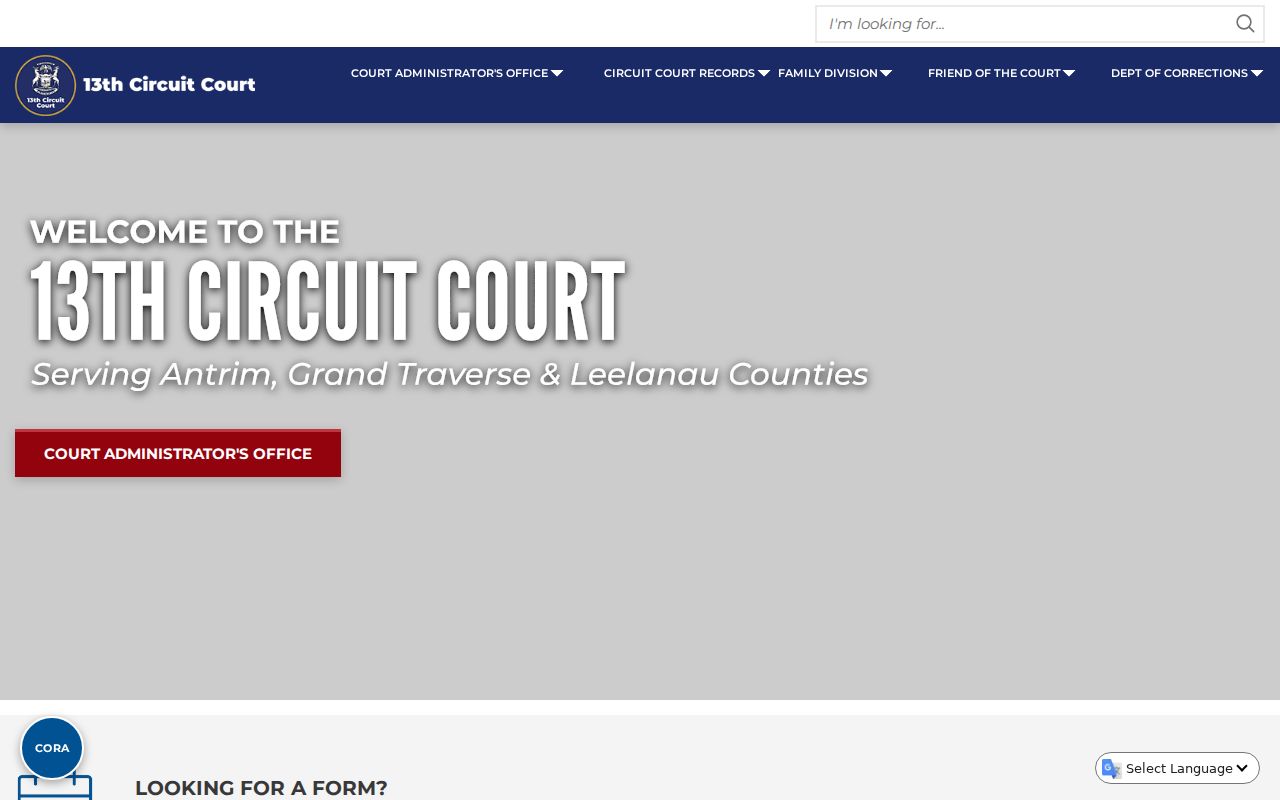
The local counter in Leelanau County holds the file. The Traverse City office does not.
How Warrants Get Served in Leelanau County
Serving a warrant is the law enforcement half of the process in Leelanau County. It follows its own order of operations.
- The court transmits the warrant, and the Sheriff enters it for service.
- Deputies attempt service, which can happen at a traffic stop, at a home, or when a person is already in custody.
- An arrest on the warrant leads to booking at the county jail on the same campus as the courts.
- The person is taken before the court specified on the warrant for arraignment.
- The service record is written back into the agency system, where it may update later than the docket.
What the Circuit Criminal Search Leaves Out
Leelanau County links to a criminal database for circuit records. That database carries its own warning. It does not show all cases, because Public Act 193 of 2020 changed what a public court record can contain. Updates run nightly rather than in real time. The civil side of the same system covers a different span of years.
If an expected case is missing from the circuit records search, the county's own instruction is to contact the records office rather than assume the case does not exist.
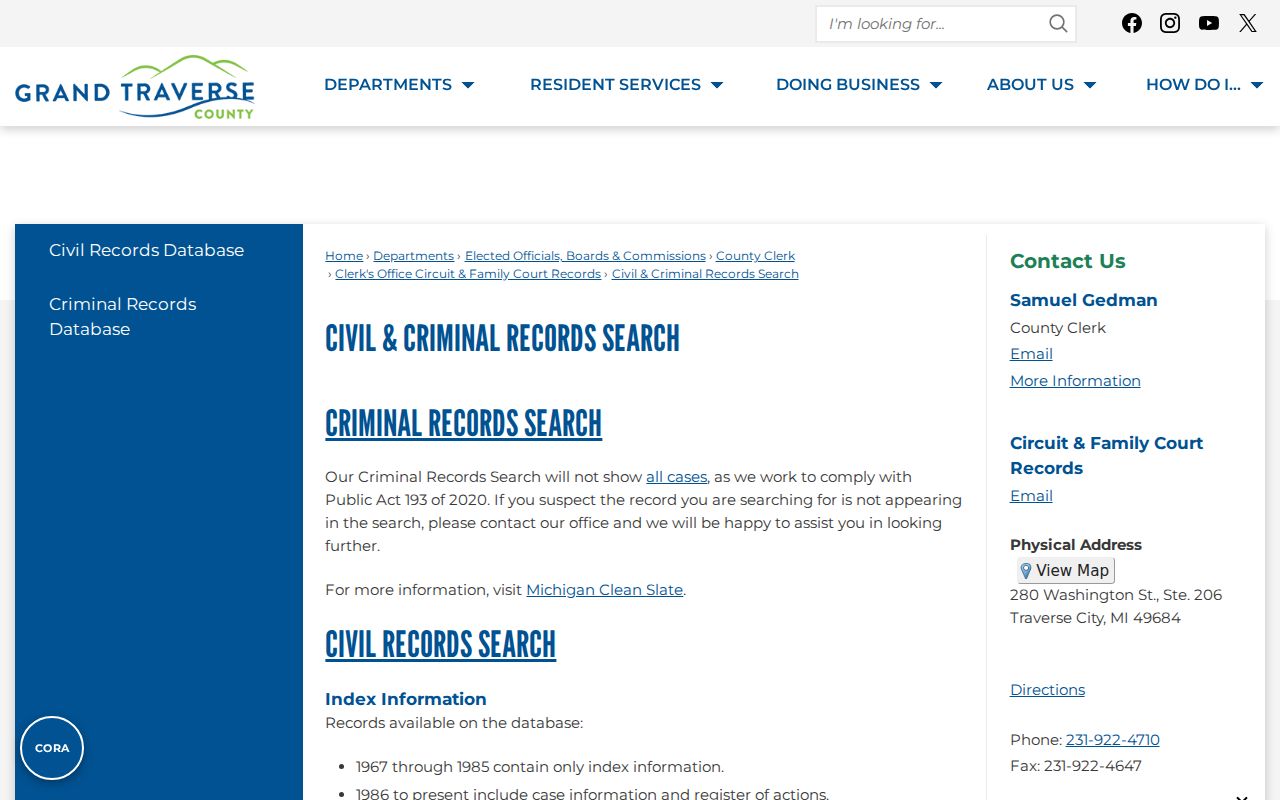
The gap is the county's own notice, not a reader's mistake.
Arrest Warrants, Summonses, and Bench Warrants
Three instruments get confused constantly, and each one means a different next step.
| Point | Arrest warrant | Summons | Bench warrant |
|---|---|---|---|
| Starts a case | Yes | Yes | No |
| Based on | Sworn complaint and reasonable cause | Same complaint review | A missed date or broken condition |
| Typical result | Custody and arraignment | A court date by notice | An order to bring the person in |
| Usual way out | Arraignment, counsel, bond | Appearance on the date | Voluntary appearance or a motion |
Arraignment and Bond After a Leelanau Arrest
Arraignment is where the case turns concrete. Under MCR 6.104, a defendant not released is arraigned without unnecessary delay. In Leelanau County court, the judge reads the charge, explains rights, and takes up counsel and eligibility for appointed representation.
- An out-of-county arrest triggers a transport procedure, so the first appearance may not be in Leelanau County.
- Release terms come from MCR 6.106 and can include a personal recognizance bond, an unsecured appearance bond, or conditions.
- Only the court can set bond, and only the court can change it.
- Keep the release order, because its conditions govern everything that follows.
Handling an Arrest Warrant in Your Name
An arrest warrant in your name is serious business. How to appear is a call for your lawyer, not a webpage. Leelanau County publishes no surrender form. No warrant gets cleared by paying a stranger.
Call a Michigan criminal defense attorney before arranging anything, and confirm the warrant directly with the issuing court. Do not approach a police station on your own plan, and do not respond to a phone demand for payment.
- Call the issuing court and confirm the charge, the warrant type, the bond, and the next date.
- Ask how the court handles a voluntary appearance and whether counsel should arrange it.
- Ask about bond, and use only the court's own payment route if the court directs one.
- Keep the release order, and confirm that the warrant status changed before assuming it did.
The county-level steps for resolving a warrant appear on the Leelanau County warrant records home page. Start there.
Federal Arrest Warrants in the Western District
Leelanau County sits inside the Western District of Michigan. Federal warrants never touch the county system. A federal complaint produces a federal warrant, the U.S. Marshals execute federal judicial process, and the docket lives in federal court rather than any state database. Federal arrest warrants can be sealed and may stay hidden until executed. A state criminal history check answers nothing on the federal side. The federal district court clerk or an attorney is the right starting point.
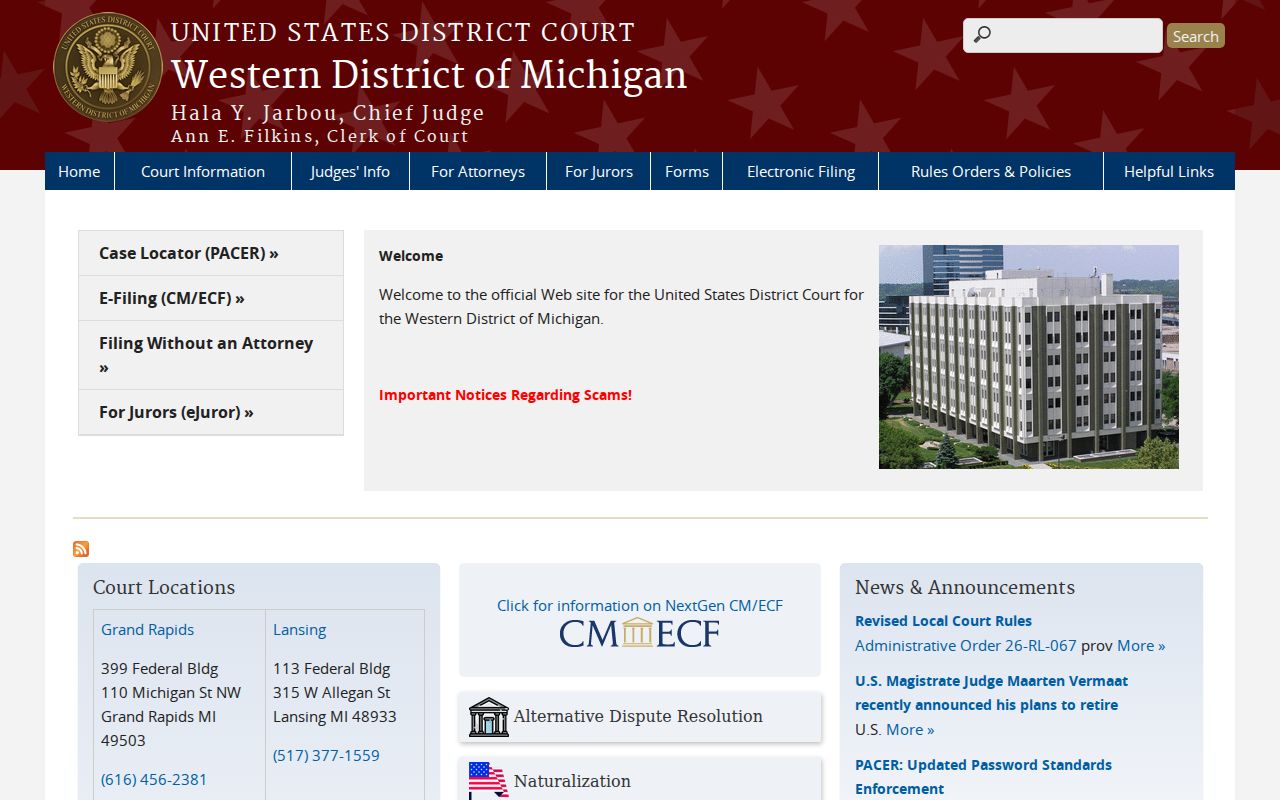
Note: The Western District of Michigan lists its own court locations. None is a Leelanau County courthouse.